
Gallery: Camp Dantzler Remembered

 )
)1920's
The Camp Dantzler story is a tale of what can be accomplished when residents with limited resources band together to support a worthwhile community project. The story begins in 1923 when (then) YMCA secretary George M. Bryan and professional men including A. L. McKinnon 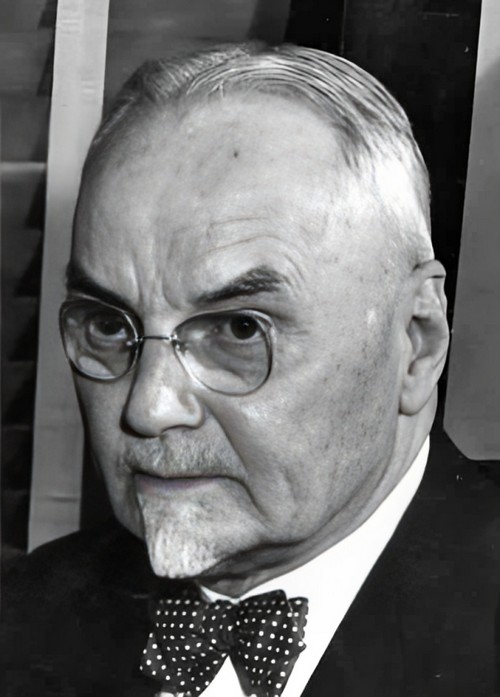 and L. B. Hudson expressed an interest in establishing a boys camp. After an extensive search, a wooded timber plot belonging to the Dantzler Lumber Co. was located. The Dantzler company graciously offered use of the property under an extended lease which included payment of property taxes.
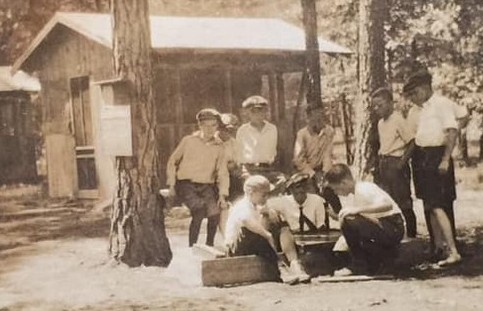
dirt floor cabin in the background
(Source: Gandy family collection)
The very first 1923 camping season saw two summer camping periods with 60 boys who used tents for shelter (Hattiesburg American: 10/8/1938). Subsequent structures were built on a hill to help keep the premises dry after the heaviest of rains. Adjacent to Black Creek, the site featured numerous swimming holes, a kitchen, a store room and sleeping quarters for a cook, a dining room and ten sleeping cabins. Two underground springs supplied the camp with water.
The camp site was located 17 miles south of Hattiesburg in the southern part of Forrest County near the Lamar County line (Hattiesburg American: 10/8/1938). The facility was open to legitimate organizations properly chaperoned for no more than seven days unless granted special permission (Hattiesburg American: 6/5/1923, 6/2/1943).
Locals wasted no time in booking the camp that first year. Groups such as the Rotary Club, Exchange Club, Kiwanis, Boy Scouts, The YWCA's Girl Reserves, Main St. Baptist Church, The Davidson Company, Agricultural Clubs, The Hattiesburg Bankers Association, and Fine Brothers Clothing were among those who held meetings, sponsored picnics or just generally enjoyed an outing at the new facility (Hattiesburg American: 6/12/1923, 7/24/1923, 8/10/1923, 8/16/1923, 8/23/1923, 8/20/1923).
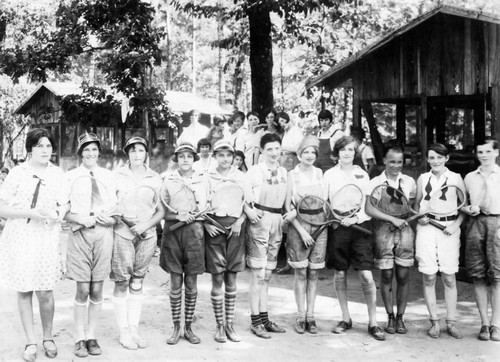
The Dantzlers announced the sale of their timberlands in 1924 to the Batson-Hatten Lumber Co. The YMCA subsequently purchased some 46 acres from Batson-Hatten in 1927 at a nominal price (Hattiesburg American: 6/5/1923, 4/3/1924, 6/2/1943).
The 1924 sale of the Dantzler property, however, did not hinder ongoing camp activities. The (then) State Teacher's College graduating class held their annual picnic on the site (Hattiesburg American: 5/23/1924), and (then) Hattiesburg High's Coach Steve Blair first used the facility for his football team's training that year (Hattiesburg American: 9/2/1924). The camp also opened its doors to Laurel and Jones County children when their Camp Rotary was damaged by floods (Hattiesburg American, 6/30/1924). Camp improvements that year saw the construction of a caretaker's home (Hattiesburg American, 4/1/1924).
1925 saw (then) YMCA General Secretary J. Maury Gandy 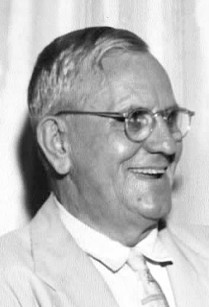 officially take charge of managing Dantzler on behalf of all civic groups and organizations that supported the camp (Hattiesburg American, 6/10/1925). Fundraising was among his responsibilities. Early 1926 fundraisers found McInnis Bros. Clothing Store donating 5% of its profits on a May 1st sale. The Anderson Theater held a benefit performance for its showing of "The Fighting Heart," and a water carnival at Bouie Beach was sponsored by the YMBC and YGBC groups (Hattiesburg American: 4/30/1026, 5/5/1926, 7/1/1926). Fundraising would be a never-ending challenge for Camp Dantzler throughout its history.
1928 saw the addition of a rifle range for the purpose of teaching youngsters the proper care and handling of firearms under appropriate supervision. While proficiency certificates were issued as awards for marksmanship, youngsters who participated were required to learn and abide by a more important code of ethics which included a promise to never point a gun (loaded or unloaded) at anyone and to follow safety measures when climbing fences with a gun (Hattiesburg American: 3/27/1928).
1930's and 1940's
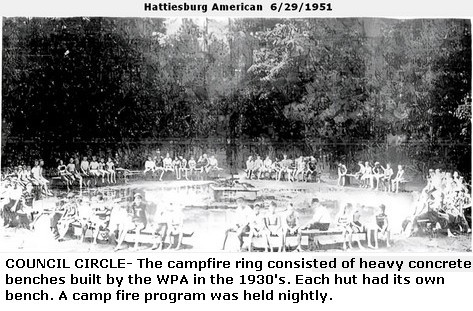
When the original camp cabins were built, they were simple structures laid down on the bare ground. 1933-34 saw a campaign to replace those cabins with new ones consisting of solid creosote flooring and equipped with drop shutters, panel and screen doors. Familiar company and organization names of the 1930's contributed to the new buildings and included: Hattiesburg Rotary Club, Tatum Lumber Co., Newman Lumber Co., Gordon Van-Tine Co., Reliance Manufacturing and The Hattiesburg American (Hattiesburg American: 10/6/1934). Contractor M. N. Vinyard and associates were among the individuals who contributed some of the labor involved in the construction (Hattiesburg American: 4/12/1934).
The 1940's were also World War II years, but Camp Dantzler persevered. Plans were underway for a new recreation hall where campers could take refuge during inclement weather. A system of electric lights powered by a 1500-watt generator was installed in all camp buildings. The electric lights were seen as a safety measure to replace the kerosene oil lanterns used up to that time (Hattiesburg American: 4/13/1942).
On the activities front, (then) Mississippi Southern College football coaches Reed Green and "Pie" Vann held the first of many training camps for their team's players (Hattiesburg American, 9/3/1940). Hattiesburg High held its first Dantzler band camp in 1947 (Hattiesburg American: 7/25/1947), and The Optimist Club sponsored a Crippled Children's summer camp in 1949 (Hattiesburg American, 4/7/1949).
1950's and 1960's
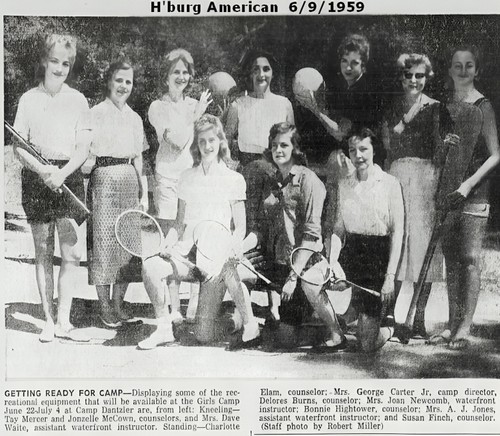
This era saw improvements in sanitary facilities. Drinking fountains were also added in a new dining hall. Lights were rearranged in the outdoor areas and a new water heater was installed in the kitchen. Twelve cabins were available for use (Hattiesburg American: 4/28/1956).
A diverse range of activities was available in the 1950's and included gun safety, horseback riding, swimming, hiking, archery, tennis, badminton, baseball and other outdoor games. Girl campers had additional offerings that included basketry, weaving, plaster molding, folk and interpretive dancing, leatherworks, handcrafts and glass etching (Hattiesburg American: 6/18/1958).
The Hattiesburg Recreation Department introduced a day camp in which children from different playgrounds were transported to the Dantzler site by bus and brought back to the playgrounds at 5 p.m. All day camp activities that first year were centered on an "American Indian" theme (Hattiesburg American: 7/29/1967).
1970's and 80's
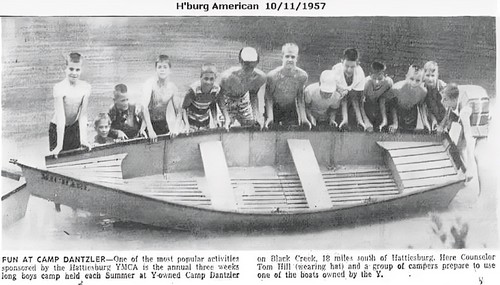
Camp Dantzler was not immune to natural disasters. Hurricane Camille played havoc on Mississippi in 1969; Camp Dantzler wasn't spared. Two of the huts were demolished and the remaining ones were badly damaged. Two of the huts were replaced in 1970 with the remaining huts patched together in time for that year's summer camping season; those buildings, however, had to be replaced eventually. The plans for future huts included concrete block construction and a larger size than the 1935 huts they replaced (Hattiesburg American: 8/26/1970). Eight huts had been replaced by 1973. A new caretaker home was also needed (Hattiesburg American: 5/29/1973).
Nor was Camp Dantzler immune to theft. "The Canoe" had been used by generations of boys during their stay at Dantzler. The craft was originally purchased by men who (as boys) attended the camp in the 1920's. After returning from World War II, the men used the camp for Labor Day weekend family outings. They purchased the canoe for the camp with the stipulation that it was theirs on Labor Day weekends. The aluminum craft was no longer manufactured and was irreplaceable. It was the second time the canoe had been stolen (Hattiesburg American: 7/13/1973).
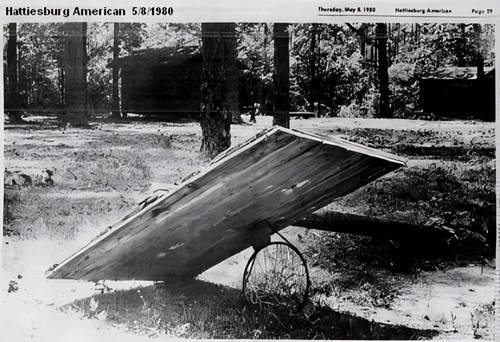
Nature struck a blow to the camp once again when Hurricane Frederic hit in 1979. Beyond physical damage to the structures, new health department standards required upgrades such as air conditioning, hot and cold showers and new bathroom facilities, amenities that Dantzler never had before. Mike Smith,  (then) YMCA director, said:
"I think of our camp as a primitive camp. We've always bathed in the creek and done just about everything outdoors. We have cabins to sleep in, but everything else we do besides eating and when it's raining we do outside. I'd say maybe we're getting too soft in that respect" (Hattiesburg America: 5/8/1980).
Since funds were not available for the necessary repairs and upgrades, Dantzler was shut down until 1988. Under the direction of the Pine Belt Family Y director, Dana Tidmore,  the camp was reopened for day trips for elementary school children. Activities included nature study, fort building, hiking, swimming, archery and BB gun instruction. Boy Scout Troop 175 cleaned the beach area and also helped with setting up the archery and BB gun ranges. Fundraisers helped cover camp operation and transportation costs, while camping and sporting equipment was donated (Hattiesburg American: 5/16/1988).
Dantzler field trips continued in 1989 (Hattiesburg American: 7/6/1989), though no additional newspaper references to the camp were found after that year.
Postscript
The YMCA's Camp Dantzler was used for a variety of purposes by different organizations over its history, but it was originally geared toward children with an emphasis placed on developing outdoor skills and building character while having fun.
While Dantzler days are no longer with us, many of us "of an age" have fond memories of the times we spent there. We can look back at those times knowing that we were part of the history of a cherished Hattiesburg area institution. We can also take solace in the knowledge that today's "Family Y" continues the Camp Dantzler tradition of building a healthy mind, body and spirit for today's individuals and communities.
HAHS is fortunate to have an album of Girl Scout photos taken at Camp Dantzler and other area recreational facilities in the 1940's and 50's. The collection was donated by Betty Hemeter and is available for viewing during our regular visiting hours.
Learn more about activities available through the Family Y in our area.